Spray Foam Insulation Cost Guide for Queen Creek, AZ Homes (2026)

If you've priced spray foam in Queen Creek and gotten quotes that vary more than you expected, that's normal — spray foam pricing genuinely depends on more variables than fiberglass batts or blown-in insulation. Whether it's new construction or a retrofit, which area of the home you're treating, whether the job calls for open-cell or closed-cell foam, and how much square footage you're covering all move the final number.
This guide breaks down real-world cost ranges by project type and area of the home, and explains why open-cell and closed-cell price out differently. Every number here is a typical range, not a quote — your project's framing, access, and scope all move the final price, which is why we push toward a free assessment before committing to a number.
Typical cost per square foot
Across the industry, spray foam insulation typically runs $1 to $5 per square foot installed, averaging around $3 per square foot. Open-cell foam sits toward the lower end of that range; denser, higher-R-value closed-cell foam sits toward the higher end. Most professional installers also carry a minimum job charge, commonly in the $1,500-$2,000 range.
New construction vs. retrofit pricing
New-construction spray foam is generally the most cost-effective way to insulate on a per-square-foot basis, since framing is fully open and there's no existing finish to protect or old insulation to remove first. A whole-envelope new-build package (roofline, walls, garage) typically prices out lower per square foot than the same coverage would cost as a retrofit on a finished home.
Cost by area of the home
- New-construction roofline (conditioned attic): the most cost-effective way to cover the largest heat-gain surface, and our default recommendation for new builds.
- Existing attic (attic-floor retrofit): typically the most cost-effective retrofit option for an existing home.
- Garage ceiling and walls: often one of the smaller, more contained projects — and one of the highest-impact for homes with an above-garage bonus room.
- Interior walls: priced per board foot of wall cavity; open-cell is typically the more budget-friendly choice here.
- Whole-home new construction: the most cost-effective way to insulate overall, since framing is open and access isn't a factor.
Why open-cell and closed-cell price out differently
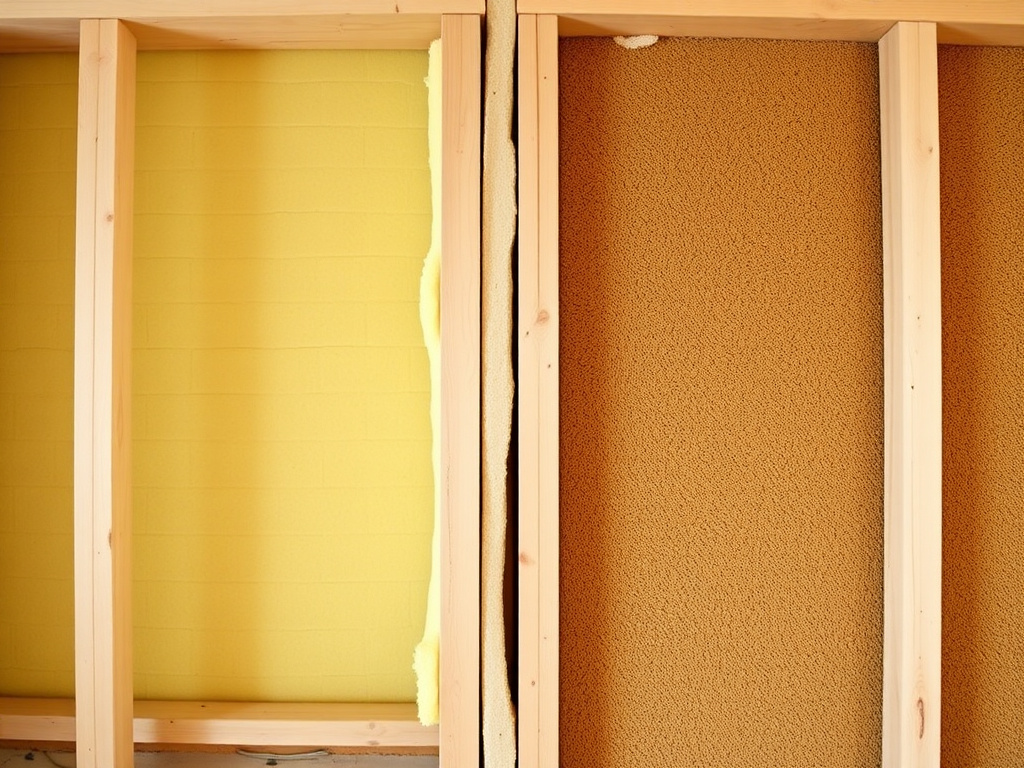
Closed-cell foam uses a denser chemical formulation, delivers roughly R-6 to R-7 per inch versus open-cell's R-3.5 to R-4, and typically requires more application skill — all of which shows up in a higher per-board-foot price. That premium is worth paying for roof decks with limited depth, garages facing extreme heat exposure, or anywhere moisture control matters. For standard interior walls and vented attic floors, open-cell usually delivers comparable real-world performance for less money.
Frequently asked questions
Generally yes, on a per-square-foot basis — open framing means faster, more straightforward access, and there's no old insulation to remove or finished surfaces to protect. A whole-envelope new-build package is typically the most cost-effective way to get comprehensive spray foam coverage.
Financing availability varies by contractor and project size. Ask about options during your assessment — for larger whole-home or new-construction projects, financing can make a meaningful upgrade more manageable upfront.
Ready for a free quote?
Tell us about your home and we'll build a clear, no-pressure quote.